01
Diagnose the existing envelope
AMF reviews the substrate, previous coatings, moisture indicators, cracking, sealants, contamination, exposure and adjoining materials before a system is proposed.
 Start a project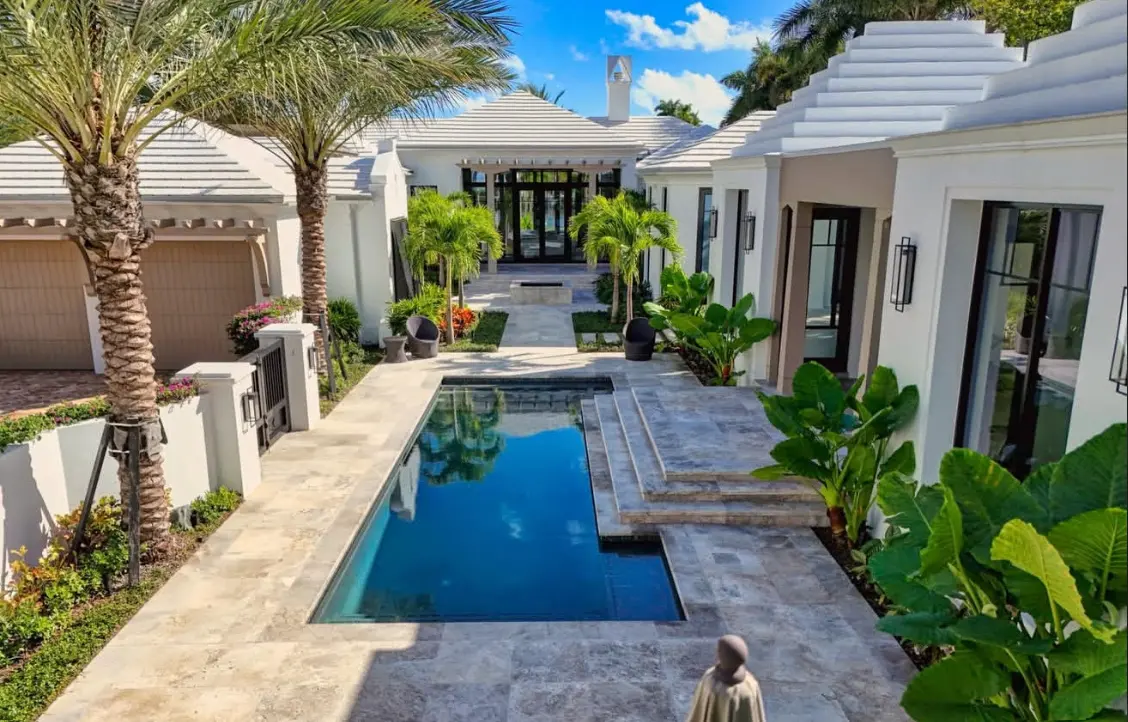
Applied by All Metal Finishes
AMF specifies and applies field-cured Kynar Aquatec® PVDF coating systems to the exterior walls of luxury residences. It brings the fluoropolymer performance architects already trust on premium metal and glazing to stucco, masonry, EIFS and concrete. The result is not simply a freshly painted home. It is a façade engineered for stronger color retention, cleaner surfaces, extreme South Florida weather and a far longer ownership horizon.
The exterior-finish decision
Conventional acrylic and elastomeric paints can provide an attractive initial finish, but they are still judged against a brutal South Florida service environment. Ultraviolet light attacks the binder. Salt-bearing air and wind-driven rain keep contamination and moisture at the surface. Heat drives daily expansion and contraction. Sand, pollution and organic matter accelerate soiling. As a conventional film weathers, it can lose sheen, chalk, hold dirt and become increasingly difficult to keep looking new.
AMF offers a different decision. Kynar Aquatec uses PVDF fluoropolymer technology to create a more weather-stable, lower-surface-energy finish that protects the color and the integrity of the coating itself. This is the logic behind factory Kynar finishes on high-value windows, curtain wall and architectural metal, adapted for field application across the building envelope. For a luxury homeowner, it means protecting the design and reducing the frequency, disruption and uncertainty of repeated exterior repainting. For the architect and builder, it creates a documented high-performance finish specification worthy of the rest of the home.
| Exterior decision | Conventional house paint | AMF-applied Kynar Aquatec PVDF |
|---|---|---|
| What forms the finish | Acrylic or elastomeric resin selected primarily as an exterior paint binder. | A licensed architectural coating formulation containing Kynar Aquatec PVDF within the binder system. |
| Years of intense UV | Weathering can progressively weaken the binder, allowing color loss, chalking, sheen change and film erosion. | Exceptionally stable carbon-fluorine chemistry resists UV-driven breakdown and protects long-term color and film integrity. |
| Salt, moisture and contamination | As the surface weathers and becomes more porous, dirt, salt and organic matter can become harder to release. | Low surface energy, water repellency and a smooth weather-stable film help the façade shed soil and clean more readily. |
| Mold and mildew strategy | Protection commonly relies on the base resin plus added dry-film preservatives that can diminish through weather and water exposure. | Mildew resistance, low surface energy and non-nutrient character are inherent advantages of the PVDF resin platform. |
| Solar heat option | Surface temperature is largely governed by color, pigment selection and the wall assembly. | Infrared-reflective formulations can reject more solar energy, including in select darker colors, and reduce peak wall temperature. |
| The ownership horizon | A familiar initial finish with a repaint cycle that varies widely by product, exposure, preparation and maintenance. | A higher-performance façade investment designed to preserve appearance, reduce maintenance pressure and extend the repaint horizon. |
Specified and installed by AMF
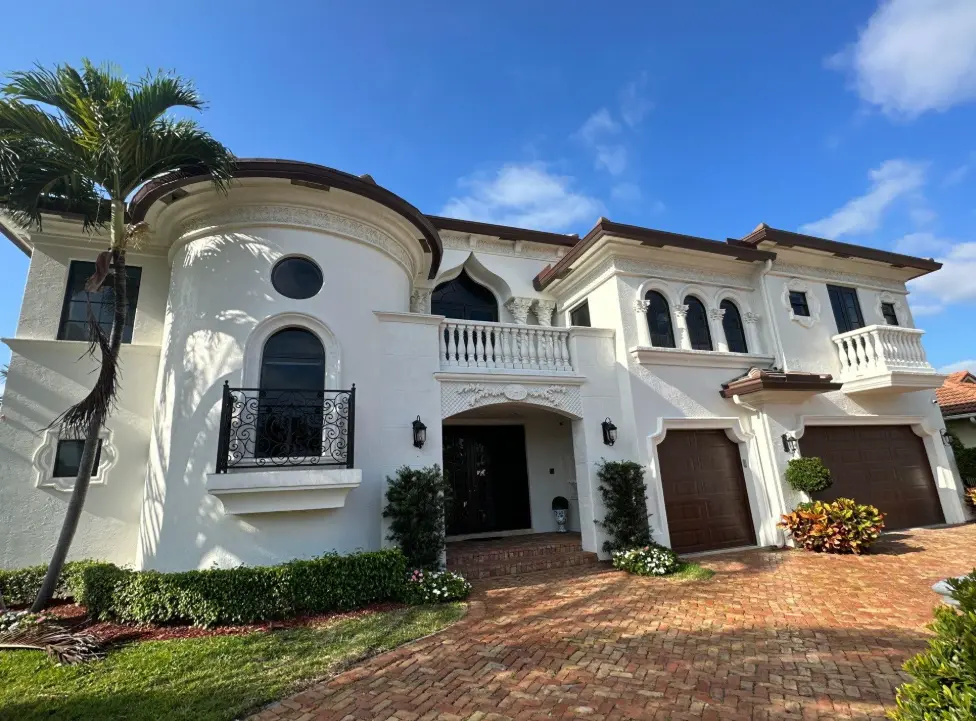
Kynar Aquatec is not a premium can of paint that should be handed to the lowest bidder. It is a thin-film architectural coating whose performance depends on substrate condition, surface preparation, compatible primers, color formulation, application method, environmental conditions, film build and cure. AMF manages those variables as one system. We inspect the residence, identify the wall assemblies and existing finishes, determine what must be repaired or corrected, produce the coating specification, coordinate samples and color approval, protect the adjoining glass, metal, stone and landscape, then apply and document the work with our own specialty-coatings team.
Arkema explains that these coatings are applied in thin films and that optimal performance is best achieved through an approved applicator trained and certified by a licensed Kynar Aquatec coating manufacturer. AMF brings that qualification together with fourth-generation experience in architectural metals, windows, doors and high-performance finishes.
AMF reviews the substrate, previous coatings, moisture indicators, cracking, sealants, contamination, exposure and adjoining materials before a system is proposed.
We determine cleaning, repairs, conditioning, primer, topcoat, color, infrared-reflective options, coat sequence and target film build for the specific home.
Glazing, architectural metals, roofing, stone, paving and landscaping are protected while the façade is cleaned and prepared to receive the approved system.
Our crew applies the coating by the method suited to the assembly, monitors field conditions and coverage, inspects the finish and provides project records and care guidance.
The science behind the upgrade
Every architectural coating contains a binder or resin. It is the continuous film that adheres to the prepared wall, locks in pigment and decides how the surface responds to weather. Kynar is Arkema's trademark for PVDF, a fluoropolymer built around exceptionally strong carbon-fluorine bonds. That chemistry is highly resistant to ultraviolet-driven breakdown, which helps preserve color, gloss and film integrity instead of allowing the surface to become faded, chalky and porous. PVDF also has low surface energy, so water, salt, dirt, pollutants and organic matter have greater difficulty wetting and anchoring to the finish. Conventional paints often supplement their base resin with dry-film preservatives to control mildew, while the Kynar Aquatec platform adds inherent mildew resistance, non-nutrient character, water repellency and dirt shedding through the PVDF resin itself. These properties work together: the film stays more stable, the surface remains smoother, contaminants release more readily and the façade retains the appearance the architect intended.
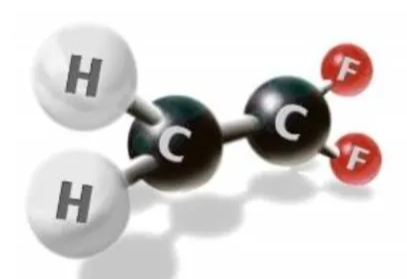
PVDF and PTFE, the fluoropolymer associated with Teflon®, are different materials, but they share the design advantage of strong carbon-fluorine chemistry and low-surface-energy behavior. For the homeowner, the useful outcome is straightforward: the exterior finish is better equipped to resist the forces that fade, chalk, stain and soil ordinary wall paint. Arkema reports more than 20 years of South Florida exposure for Kynar Aquatec coatings, with performance similar to traditional Kynar 500 factory-applied PVDF finishes.
Infrared reflection and thermal cycling
Specially formulated infrared-reflective Kynar Aquatec wall systems can reflect more of the sun's near-infrared energy, including in many colors that appear dark to the eye. Arkema's published testing reports exterior wall-surface reductions of as much as 40°F compared with traditional paints in tested configurations. Lower peak temperatures mean less heat stored in the wall and a smaller daily swing between heating and cooling. That moderates one of the forces driving expansion and contraction across the coating, stucco or masonry, sealant joints and adjoining materials, while also reducing heat conducted inward. Color, formulation, orientation and the complete wall assembly determine the final result, which is why AMF evaluates the thermal option as part of the full façade specification.
Infrared-reflective pigments reject energy the eye does not see.
Less absorbed energy means less heat stored at the exterior surface.
The façade experiences less severe heating and cooling amplitude.
Less thermal cycling supports long-term coating and interface performance.
Reflect more heat. Reduce daily surface-temperature extremes. Preserve the coating film. Support the surrounding envelope. Keep the selected color looking like the selected color. This is performance a conventional repaint was never designed to coordinate as one system.
Documented performance
Laboratory testing establishes the chemistry. Long-term buildings show what it means for owners. These published Kynar Aquatec installations include a South Florida residence, a high-UV landmark and a lighthouse standing in open water.
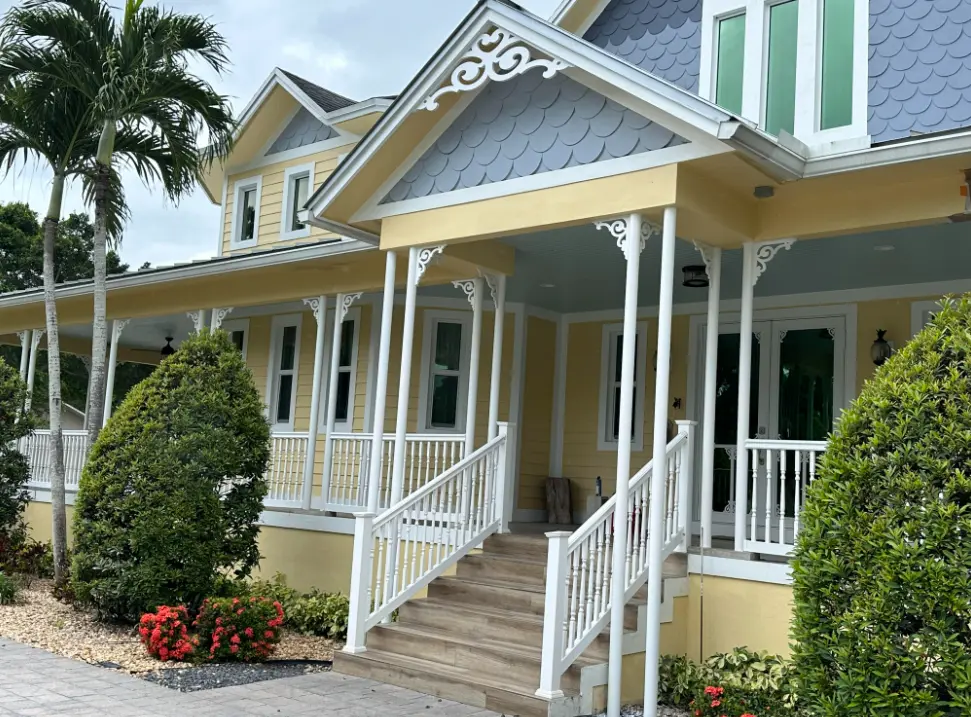
After eight years, Arkema reported only 1 ΔE of total color change, no chalking or coating degradation, and no mold or algae growth.
Acrylic latex had faded, chipped and flaked. The restoration team selected a Kynar Aquatec PVDF system for long-term color, weatherability and resistance to dirt and dust pickup.
The field-applied fluoropolymer roof finish completed 15 years in an exceptionally severe marine environment before a full recoating in 2023.
Color without the short horizon
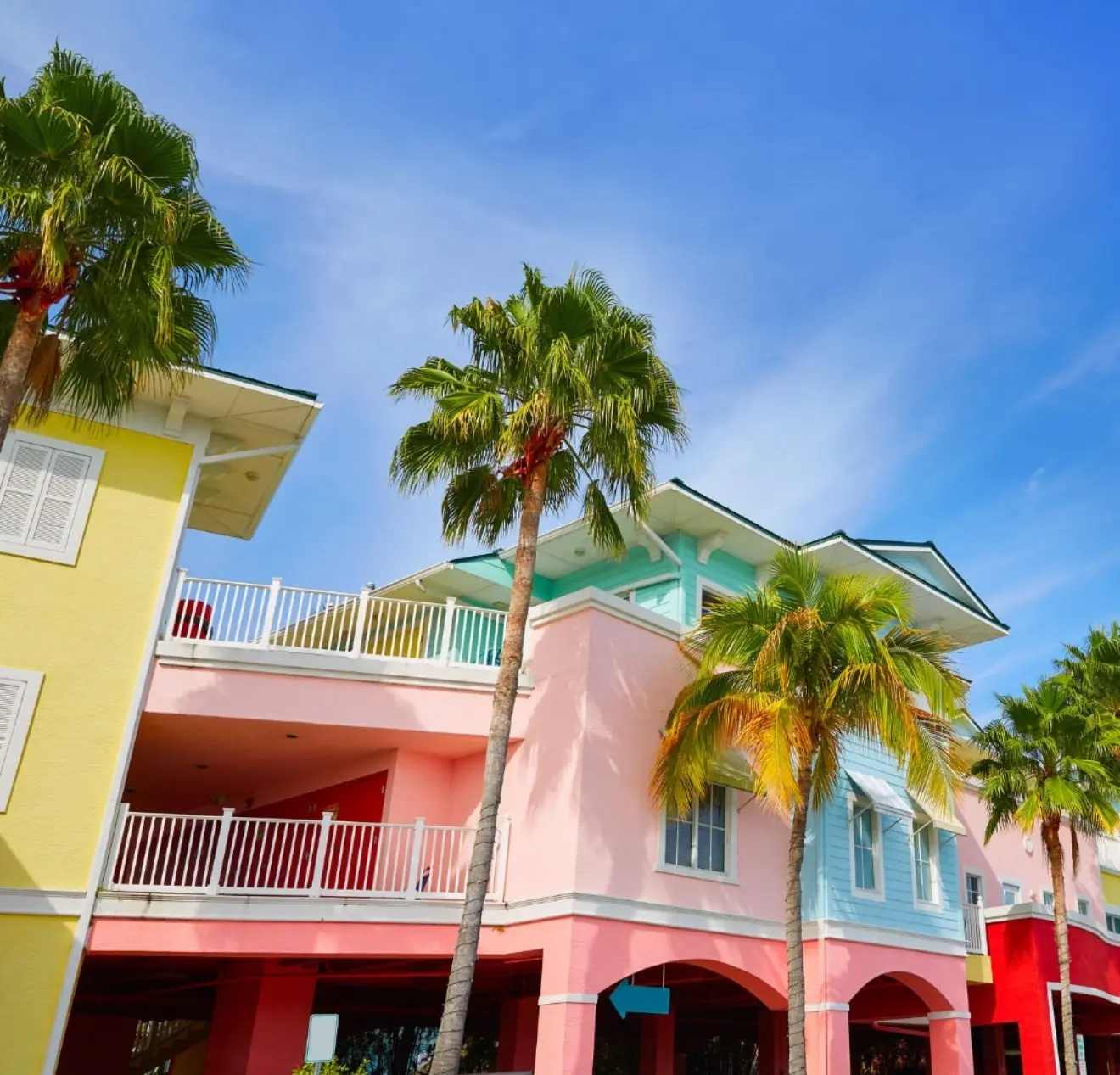
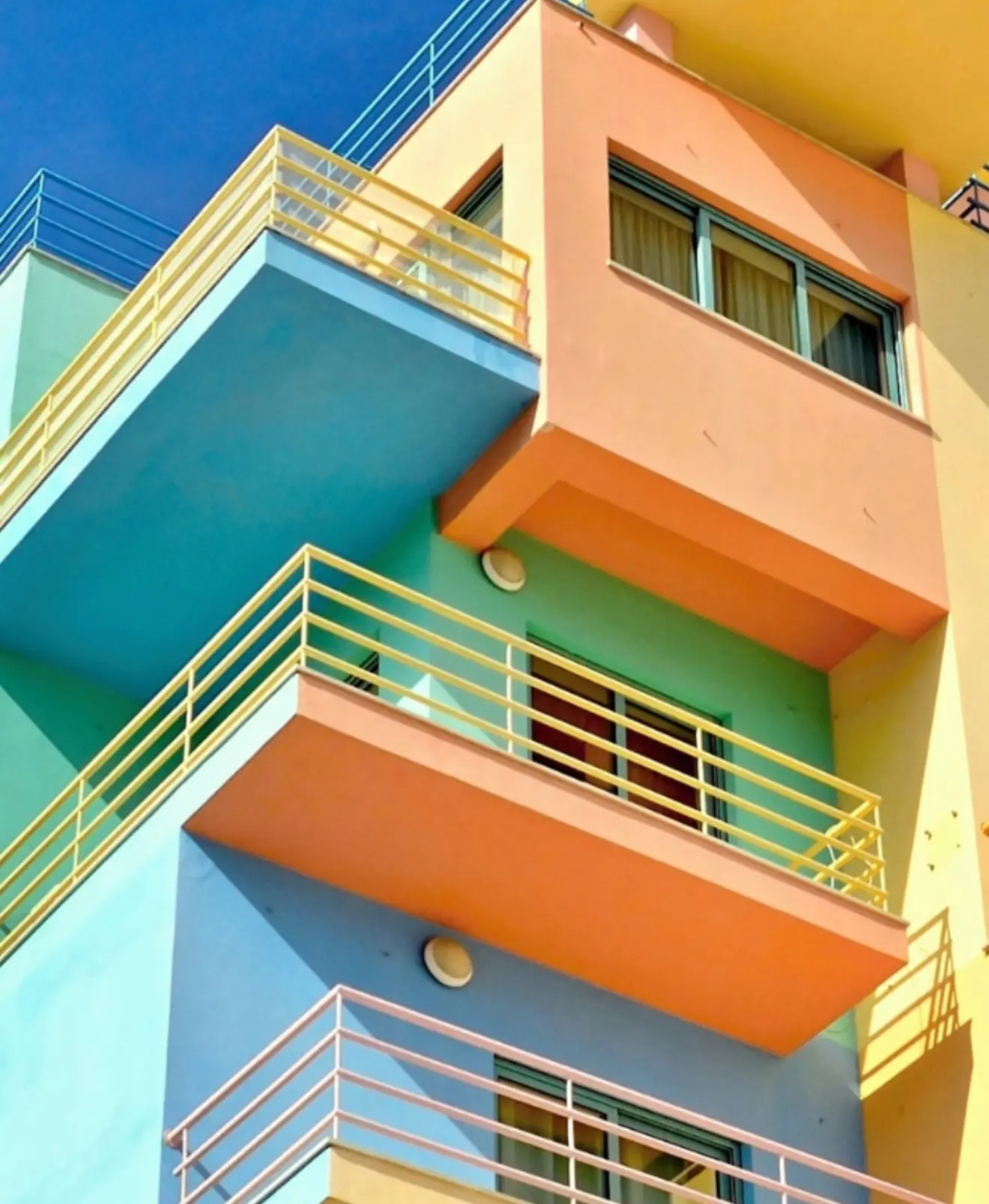
Bright, deep and saturated colors reveal binder weakness quickly because even modest fading becomes visible. Kynar Aquatec combines PVDF weatherability with carefully selected pigments and can pair color with infrared-reflective technology. AMF reviews the proposed color, solar response, substrate and warranty path, then produces samples for approval before the field finish is released.
New construction and restoration
On new luxury construction, AMF can work with the owner, architect and builder to evaluate substrates, colors, solar-reflective options, samples, adjacent finishes and the warranty path before application begins. On an existing residence, we can determine whether the façade is a candidate for restoration and what preparation or repair must precede coating. The earlier the conversation starts, the more intelligently the finish can be coordinated with the complete envelope.
New or existing cementitious façades after moisture, crack and compatibility review.
CMU, block and compatible mineral wall assemblies with project-specific preparation.
Specified exterior insulation and finish systems after confirming condition and system compatibility.
Architectural and exposed concrete where long-term appearance and weathering matter.
High-exposure perimeter walls and caps subjected to concentrated sun, rain and deposits.
Retaining walls, gateways, privacy walls and other prominent exterior surfaces.
AMF coordinates the approved color, coating system, preparation, application records and documentation required for the manufacturer-warranty path.
Technical record
AMF wants owners and project teams to understand exactly why this finish belongs on a high-value coastal home.
Applied by a South Florida coatings specialist
Contact AMF during design, before exterior painting begins, or when an existing façade is fading, chalking, soiling or approaching another repaint cycle. We will assess the home and develop the complete Kynar Aquatec application plan.